Last year's
(1995) celebrations of the fiftieth anniversary of the
end of WWII provided many opportunities to reflect upon
the events of more than fifty years ago. As aviation enthusiasts,
we all look to today's "warbirds" like the Spitfire and
Mustang as icons of the wartime era. Whilst the men and
women who served during WWII graciously accept the expressions
of gratitude of later generations, only they can fully
appreciate what we have been commemorating, for they will
tell you that "You had to be there". Similarly, although
today's warbirds are representative of the era, few were
actually "there". Indeed, the reason most of these warbirds
survive is that they were not on active service at the
front. One survivor which was there in the thick of it
when Australia's future looked bleakest and the mood of
the people could best be summed up by the two words "Brisbane
Line", is a veteran Douglas DC-3 which was largely overlooked
during VP anniversary celebrations. In May of 1942, this
DC-3 was busily ferrying troops to New Guinea and returning
with wounded. It is popularly believed that this same
DC-3 was later called to higher duties as the personal
aircraft of the Supreme Allied Commander in the South
West Pacific Area, General Douglas MacArthur. (Although
there is considerable circumstantial evidence of a "MacArthur
connection", hard proof has been elusive. Clearly though,
even without a MacArthur connection, this DC-3 is historically
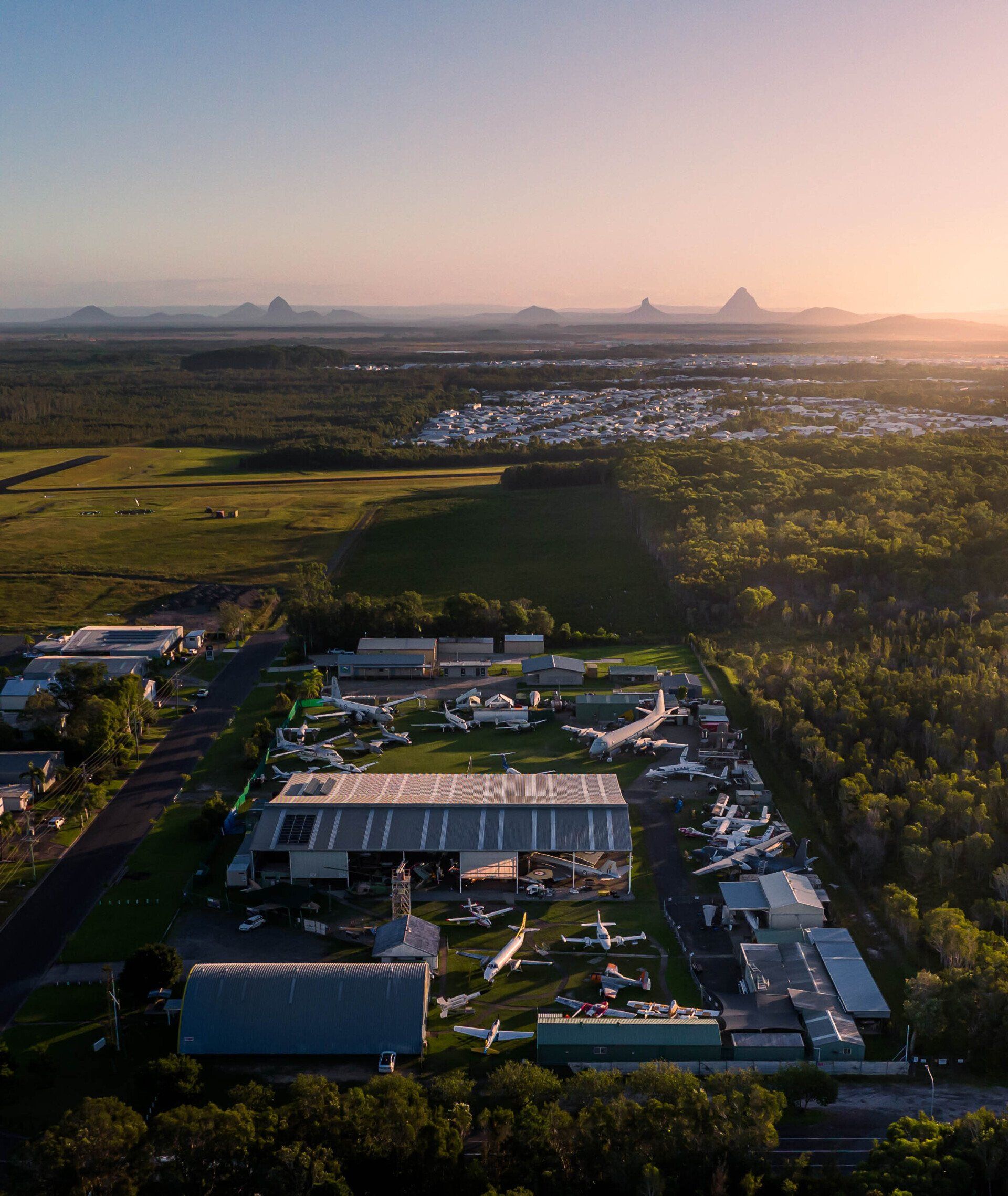
significant). The aeroplane now resides at the Queensland
Air Museum in Caloundra where she awaits restoration to
static display standard. To fully appreciate the historical
significance of what is now Australia's oldest DC-3 and
the twelfth oldest DC-3 in the world, one must go back
to 1937.
On 24 April 1937, a brand new DC-3 (manufacturer's serial
number 1944) took to the air for the first time at the
Douglas plant at Santa Monica. The same day, the aeroplane
was accepted by Douglas' European agent, Fokker, who in
turn delivered it to the Dutch airline KLM as PH-ALW.
The following day, the aircraft departed for New York
where it arrived on 28 April to be dismantled for shipping
to Holland on the S.S. Pennland. On arrival at Waalhaven,
Rotterdam, the DC-3 was re-assembled by KLM engineers,
one of whom was a young John Gyzemyter who subsequently
enjoyed a long career with KLM, KNILM and Qantas. (After
his retirement, John settled in Brisbane where he now
lives within walking distance of the author! This amazing
"small world" coincidence did not emerge until after QAM
had acquired the DC-3 and the author began researching
its history).
After a successful test flight, the DC-3 was ferried to
Schiphol where it later entered service on KLM's Amsterdam-Batavia
route as the "Wielewaal" (Golden Oriole). (KLM's DC-3s
were given bird names beginning with the last letter of
the registration). The "Wielewaal" was one of nine DC-3s
which were configured with only eleven luxury sleeper
seats for passenger comfort on the week-long trip to the
Netherlands East Indies and as with other KLM DC-3s it
featured a right hand door. The "Wielewaal"'s inaugural
service (flight 456) departed Schiphol on 3 July 1937
under the command of Captain Van Veenendaal, carrying
459 kg of mail and an unknown number of passengers.
With the outbreak of war in Europe, all flights to Batavia
originated in Naples and major overhaul work was transferred
to KLM's East Indies subsidiary, KNILM in Bandoeng. In
June 1940, the "Wielewaal" was re-registered PK-ALW and
placed under the operational control of KNILM although
it remained KLM property and retained KLM livery. When
it was feared that Italy was about to enter the war on
the side of Germany, KLM moved its base from Naples to
Lydda in Palestine. On 8 February 1942, the "Wielewaal"
departed Lydda under the command of Captain Evert Van
Dijk on what was to be the last service to Batavia. Advised
that he could not land in Singapore as planned because
of advancing Japanese forces, Van Dijk awaited further
clearance in Calcutta. Cleared to depart via Akyab, Van
Dijk later arrived at Medan where he encountered a group
of 36 women and children awaiting evacuation to Batavia.
To accommodate the extra load, the heavy, bulky sleeper
seats were removed and abandoned at Medan. The "Wielewaal"
arrived safely in Batavia on 15 February 1942, the same
day that Singapore fell. During her time on the East Indies
route, the "Wielewaal" made 34 return trips to Batavia
carrying a total of 26,294 kg of mail.
In preparation for the imminent invasion, KNILM's aircraft
were painted in camouflage and fitted with additional
fuel tanks. The camouflage colours and pattern were designed
by the military who often used KNILM aircraft for troop
movements. Whilst the registration PK-ALW was reapplied
in white, all other markings including the name "Wielewaal"
were deleted. The additional fuel tanks came either from
the spares store or from damaged aircraft. The rearmost
cabin window on each side of the DC-3s was removed and
a gun mounting bracket and wind deflector were fitted.
Whilst the guns were fired by KNILM crews during the course
of their training by the military, they were never fired
in anger. It was accepted that the guns were of limited
use as their field of fire was restricted by the tailplane
and thus were of no use against an attack from astern.
Nevertheless, the crews drew some comfort from their presence
and in the event of an attack from astern they could at
least see who was shooting at them thanks to external
rear vision mirrors fitted either side of the cockpit!
Although all of the KNILM aircraft were used on evacuation
flights to Australia, it fell to the "Wielewaal" to operate
the last civilian flight out of the Netherlands East Indies.
On 3 March 1942, Captain Eddy Dunlop flew the PK-ALW to
an unfinished highway outside Bandoeng to await the arrival
of the Lieutenant Governor General who was to be evacuated
to Australia. However, it was not until 0100 on March
7, with heavy fighting less than 15 kilometres away, that
the aircraft finally departed with its VIP cheerfully
accepting the need for sitting on the floor. As with most
of these evacuation flights, the sole means of passenger
restraint was a length of rope tied down the centre of
the cabin! After a flight of more than seven hours, the
"Wielewaal" arrived safely in Port Hedland.
With eleven aircraft evacuated to Australia (two DC-2,
two DC-3, three DC-5 and four Lockheed 14) KNILM possessed
a significant component of the country's meagre air transport
fleet. (It is worth noting that all KNILM aircraft arrived
in Australia without passenger seats). Although KNILM
initially operated their aircraft under charter to the
U.S. military, General MacArthur was reluctant to allow
so many valuable aircraft to remain in civilian hands
and as a result, KNILM were coerced into selling their
aircraft to the USAAF. This coercion took the form of
a suspension of logistical support such as the impounding
of one hundred cases of spare parts. Surviving documents
suggest that all of the KNILM aircraft were to have been
sold to the Australian government for a token £5 each,
but the transaction was apparently overruled in favour
of a sale to the USAAF. This purchase is reputed to have
cost Uncle Sam $530,000.00 for ten aircraft (one Lockheed
14 had been written off) so it is especially ironic that
the "Wielewaal" was subsequently loaned to the Australian
Government free of charge! Under the terms of the contract,
KNILM were required to test fly all their aircraft before
the handover to the USAAF. As a manifestation of their
outrage at having to surrender the aircraft for which
they had fought so hard, the KNILM staff resolved to have
all ten aircraft ready for a spectacular test flight over
Sydney Harbour on 14 May 1942. After several aircraft
buzzed the Dutch destroyer Tromp, a DC-2, a DC-3 and a
DC-5 lined up on another target - the Sydney Harbour Bridge!
In line astern, the formation proceeded to fly under the
Bridge, once in each direction. The DC-3 in this famous
formation was PK-ALW "Wielewaal". (As the Flight Engineer
on the DC-5, John Gyzemyter can make the outstanding claim
that he flew under the Sydney Harbour Bridge twice in
a DC-5 - a record unlikely to be beaten!) The following
day, the DC-3 PK-ALW was handed over to the USAAF who
designated the aircraft as a C-49H. Such was the urgency
of pressing the DC-3 into service that there was no time
for niceties such as the allocation of a formal USAAF
serial number. Instead, the aircraft was identified by
its manufacturer's serial number (1944) which was appropriated
as a "tail number". The bureaucracy finally caught up
with the DC-3 in June 1944 when it was given the "proper"
serial number, 44-83229. The DC-3 began its military career
with the 21st Transport Squadron USAAF who used it on
trooping flights between Archerfield, Brisbane and New
Guinea. During this time the aeroplane was under the control
of the Allied Directorate of Air Transport (ADAT) who
allocated the radio callsign VHCXE. The radio callsign
was painted (without a hyphen) on the fin and rudder replacing
the military tail number. Although appearing to be a civil
registration, the callsign was for identification purposes
only, as the DC-3 was at this time a military aircraft.
In May 1943, VHCXE was flown to the Commonwealth Aircraft
Corporation factory at Fisherman's Bend in Melbourne where
the aircraft was converted from an airliner to a troop
transport. (The passage of one year before this conversion
was undertaken serves to emphasise the urgency with which
the aeroplane was pressed into wartime service). This
conversion entailed the removal of airline luxuries such
as the galley and lavatory and installation of "side-saddle"
seating. After the completion of these modifications,
the DC-3 was loaned to 36 Squadron RAAF who operated the
aircraft in USAAF markings out of Townsville with the
new callsign VH-CXL (with a hyphen). The first flight
with 36 Sqn was on 21 August 1943 from Townsville to Port
Moresby and return. Curiously, all subsequent flights
by the DC-3 were to Horn Island and it is surmised that
this was because VH-CXL was the only aircraft in 36 Sqn
which was not camouflaged. The DC-3 continued this shuttle
to Horn Island until January 1944 when it was flown to
Essendon and handed over to Australian National Airways
who operated the aeroplane on its Pacific Islands Courier
Service.
In November 1944, the aircraft was offered for sale by
the U.S. Foreign Economic Administration and subsequently
sold to ANA. During October 1946, ANA converted the DC-3
back to airliner configuration and relocated the door
from starboard to port. The newly converted DC-3 entered
service with ANA as VH-ANR "Oana" (To Inform). In February
1950, the aircraft tipped on to its nose while landing
on a boggy airstrip at Van Rook Station in Queensland.
After temporary repairs, VH-ANR was ferried direct to
Essendon for permanent repairs. The aircraft continued
to serve with ANA (later ANSETT-ANA) until April 1958
when it was leased to Butler Air Transport. In October
1958, VH-ANR returned to service with Butler as Australia's
first Viewmaster DC-3 with enlarged cabin windows.
Towards the end of 1959, the Butler name disappeared and
VH-ANR was painted in Airlines of NSW livery.
On 24 July 1972, VH-ANR was ferried from Sydney to Schofields,
having been leased to two Airlines of NSW pilots (Alex
Garriock and John Wilson) who intended to keep the DC-3
airworthy as a flying museum. The aeroplane was last flown
on 14 December 1974 when it was ferried to Camden with
its undercarriage locked down. Sadly, the flying museum
project did not eventuate and in early 1981 ownership
of VH-ANR passed to well-known Sydney aviation identity
George Markey. Again plans for an airworthy restoration
came to nothing and Mr Markey generously gifted the aeroplane
to the Queensland Air Museum in February 1994. A QAM recovery
crew arrived at Camden in August 1994 to dismantle the
DC-3 for trucking to Caloundra where it arrived on 15
September.
BUT
WHAT OF
THE "MACARTHUR CONNECTION"?
As custodians of this famous DC-3, the Queensland Air
Museum accepts that one of its responsibilities is to
get to the bottom of the alleged "MacArthur connection".
As stated previously, there is a considerable amount of
circumstantial evidence that suggests MacArthur did use
this DC-3, but no documentary proof. What is well known
is that MacArthur used a highly polished C-47 which was
named "Shiny Shiela" and later a B-17 and a C-54 which
were both named "Bataan". As the "Shiny Shiela" was not
delivered until June 1943 and the B-17 much later, QAM
researchers were presented with the tantalising question:
What did MacArthur use before June 1943? When MacArthur
was evacuated from the Philippines in March 1942, he travelled
on a war-weary B-17 as far as Alice Springs, where he
transferred to a train to complete the journey to his
new headquarters in Melbourne. MacArthur's biography records
that his first trip from Melbourne to Canberra to meet
with Prime Minister Curtin was by car. Clearly, here was
a leader in need of an aeroplane. Indeed, the MacArthur
Memorial Museum in Norfolk, Virginia has located correspondence
from MacArthur's office to the Chief of Staff, Allied
Air Forces requesting that an aircraft be assigned to
General Headquarters (GHQ). In June 1942, Air Vice-Marshal
Bostock responded with the offer of a B-17 or a DC-3 with
two new engines, fitted with seven regular passenger seats,
new radio equipment and heating apparatus and a 1,000
mile safe range. The reply from MacArthur's office indicated
that the B-17 had been inspected and found to be totally
unsuitable and that the DC-3 would be inspected at Essendon
on 18 June. Unfortunately, the letters do not reveal the
identity of the DC-3. The next clue to a MacArthur connection
arises from the time VHCXE spent at CAC being converted
to a troop transport. Notes compiled by a CAC employee
indicate that the day after VHCXE arrived at the factory,
a new C-47 arrived to be "plushed up" for General MacArthur.
It is popularly believed that the airline fittings removed
from the DC-3 VHCXE were transferred to the new C-47.
Furthermore, when this new C-47 emerged as MacArthur's
"private" aircraft, it carried the DC-3's former callsign
VH-CXE (now with a hyphen added). The DC-3 later emerged
as VH-CXL (also with a hyphen added). Why the callsign
was swapped is unknown, although it is tempting to imagine
that someone at GHQ had developed an attachment to the
CXE callsign. Certainly the existence of two CXEs (albeit
not simultaneously) has created much confusion amongst
historians and even amongst the pilots who flew them.
Although this pointed to a GHQ link, the alleged MacArthur
connection demanded further research. Crucial to this
ongoing research was the outstanding support from the
MacArthur Memorial Museum whose Archivist, James Zobel,
provided a regular flow of information as he came across
relevant documents. A major discovery was a series of
wartime photographs from the papers of the late Colonel
Joe Sherr. These photographs not only strengthened the
GHQ connection but also provided what may be the only
existing photographs of VHCXE in camouflage.
Another useful document is a flight log page which records
a local flight out of Archerfield by DC-3 serial number
1944 on 24 April 1943. This document shows the pilot as
Major Godman (GHQ) and the co-pilot as Major General Sutherland
(MacArthur's Chief of Staff). Although this further strengthened
the GHQ link, the MacArthur connection remained elusive.
As Major Godman was known to have been one of MacArthur's
personal pilots, QAM researchers set out to establish
if Major Godman was still alive and if he could be contacted.
While these feelers were being put out, previous correspondence
with another researcher in the U.S. bore fruit with the
arrival out of the blue of a letter from one Colonel Henry
Godman USAF retired! In answer to the obvious question,
Colonel Godman had this to say:
"I did fly General MacArthur in the KLM DC-3 from Melbourne
to Canberra to meet with the Prime Minister, Mr. Curtin.
We stayed on the ground for an hour or two then flew directly
back to Melbourne. On letting down from cruise level,
I came down too fast and gave the General a nose bleed.
I was chewed out by Lt. Col. Morehouse, the General's
doctor. Most of the seats had been taken out. The General
sat on the left side with a chair facing him or along
side of him where the doctor could talk to him or one
of his staff if called up. There were more seats in the
rear for the staff."
It transpired that Colonel Godman had referred to flying
MacArthur in the KLM DC-3 in a privately published biography
in 1980, long before any contact from QAM. Although Colonel
Godman has no record of the date of this flight, it could
have been on 17 July 1942 when MacArthur is known to have
attended the Prime Minister's War Conference in Canberra.
(It will be recalled that a letter from GHQ indicated
their intention to inspect a DC-3 at Essendon on 18 June
1942). Colonel Godman has located photographic evidence
that the DC-3 was in a bare metal finish at some stage
of its time with GHQ. This explains why the DC-3 was handed
over to 36 Sqn without camouflage for it evidently arrived
at CAC unpainted and there may have been no perceived
need for it to be camouflaged at this stage of the war.
WHAT
OF THE OTHER VHCXE?
Having studied the first VHCXE in some detail, it is appropriate
to examine briefly the history of the second aircraft
to carry the CXE callsign, as some aspects of its history
are relevant to the subject of this article and indeed
Colonel Godman flew both aircraft during his time as General
MacArthur's pilot. As an amusing aside, Colonel Godman
claims to have been on first name terms with MacArthur.
"He called me Hank and I called him General Sir!" When
the new VH-CXE was being prepared for delivery, Major
Godman asked that it be adorned with a nude, but only
on the right hand side so that it would not be seen by
boarding VIPs. The nude was accompanied by the name "Shiny
Shiela" which was derived from the aeroplane's highly
polished metal skin. Sadly, the nude came to the attention
of Major General Sutherland who ordered its removal. The
name "Shiny Shiela" may have been removed at the same
time for the aircraft was more commonly referred to simply
as "Sexy" although this name was never painted on the
aeroplane. Recent correspondence from Frank Cicerello
who was the radio operator on the "Shiny Shiela" states
that the name "Sexy" resulted from attempts at pronouncing
the CXE callsign! Perhaps this also applied to the first
CXE and this may be the real reason why GHQ wanted to
retain the CXE callsign! As for the "Shiny Shiela", sadly
she was scrapped in Europe in 1948.
WHAT
DOES THE FUTURE HOLD FOR VH-ANR?
Now that QAM has established that the MacArthur connection
is real, the Museum is continuing research into the
aircraft's rich history. Important as this research
may be, QAM recognises that its principal obligation
is the preservation of an exhibit of world significance.
Having gone to so much trouble to establish the MacArthur
connection, it may surprise some enthusiasts that QAM
has decided to restore the DC-3 in its current Airlines
of NSW livery. As the aeroplane has been significantly
modified over the years, it would not be appropriate
to paint it in wartime markings given that the door
has been moved from starboard to port and all cabin
windows were enlarged during the Viewmaster modification.
Quite apart from the likely impossibility of determining
the aeroplane's wartime configuration, it has survived
remarkably well as a "time capsule" of its Airlines
of NSW days and as such can be more faithfully conserved
in its present form. Although QAM has not ruled out
flying the aeroplane at some time in the future, the
Museum's first priority is to provide cover for all
its aircraft. As a result of more than twenty years
storage in the open, VH-ANR has significant corrosion,
which although not widespread, is concentrated in critical
parts of the airframe such as the wing attach angles.
Quite clearly, any airworthy restoration will be extremely
expensive and will, in all probability, exceed the estimated
cost of a new building planned to house the DC-3. As
with all museums, QAM's main problem is a shortage of
undercover space for restoration and display. Although
QAM has on the drawing board a new building six times
the size of its existing hangar, construction is stalled
for want of funding. Construction of this building,
which could begin immediately, is vital to the future
of QAM for it will serve the dual purposes of bringing
the entire collection indoors while making the existing
hangar available as a dedicated restoration facility.
Currently, museum members are faced with a familiar
"Catch 22" situation of being unable to undertake any
serious restoration because of the lack of a proper
workshop, while anything that can be restored must be
displayed in the open! Understandably, this is a source
of considerable anguish and frustration for QAM's all-volunteer
workforce who must watch their prized exhibits deteriorate
in the open. QAM are particularly eager to hear from
potential corporate sponsors who share the Museum's
determination to preserve Australia's aviation heritage.
Similarly, the Museum is keen to hear from any reader
who can contribute anything to the history of the DC-3.
UPDATE:
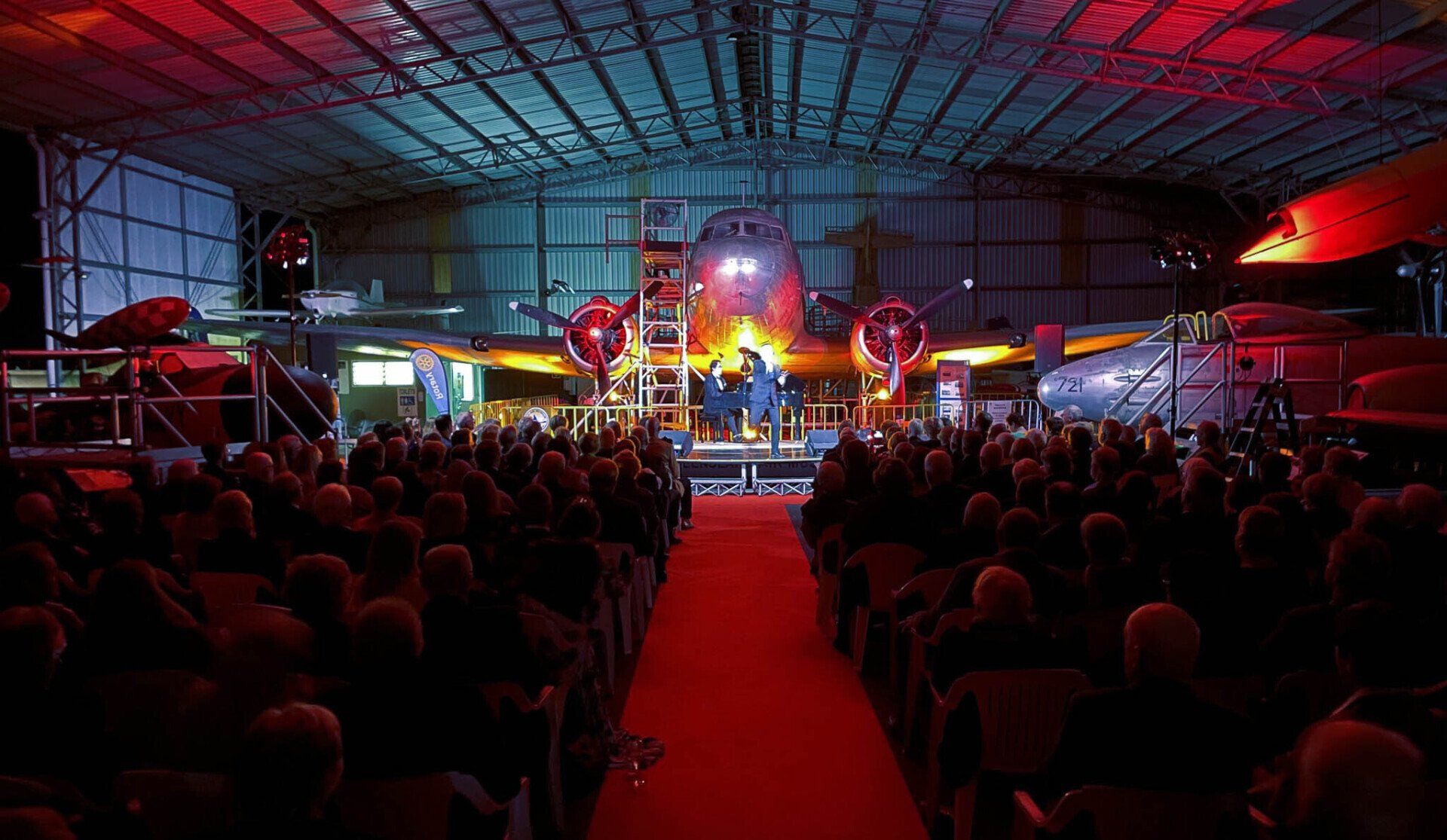
The above article was
published in 1997. When QAM's Hangar 2 opened in 2004,
DC-3 VH-ANR was one of the first aircraft to be moved
inside. The aircraft is now permanently under cover.
|